CarelineOS (App)
Full-stack digital health platform for hospitals, clinics, doctors, and patients. MUI frontend, Node.js backend, MongoDB. 100+ REST APIs, role-based access (admin, doctor, patient, staff), analysis dashboard for vitals, and secure doctor–patient communication.
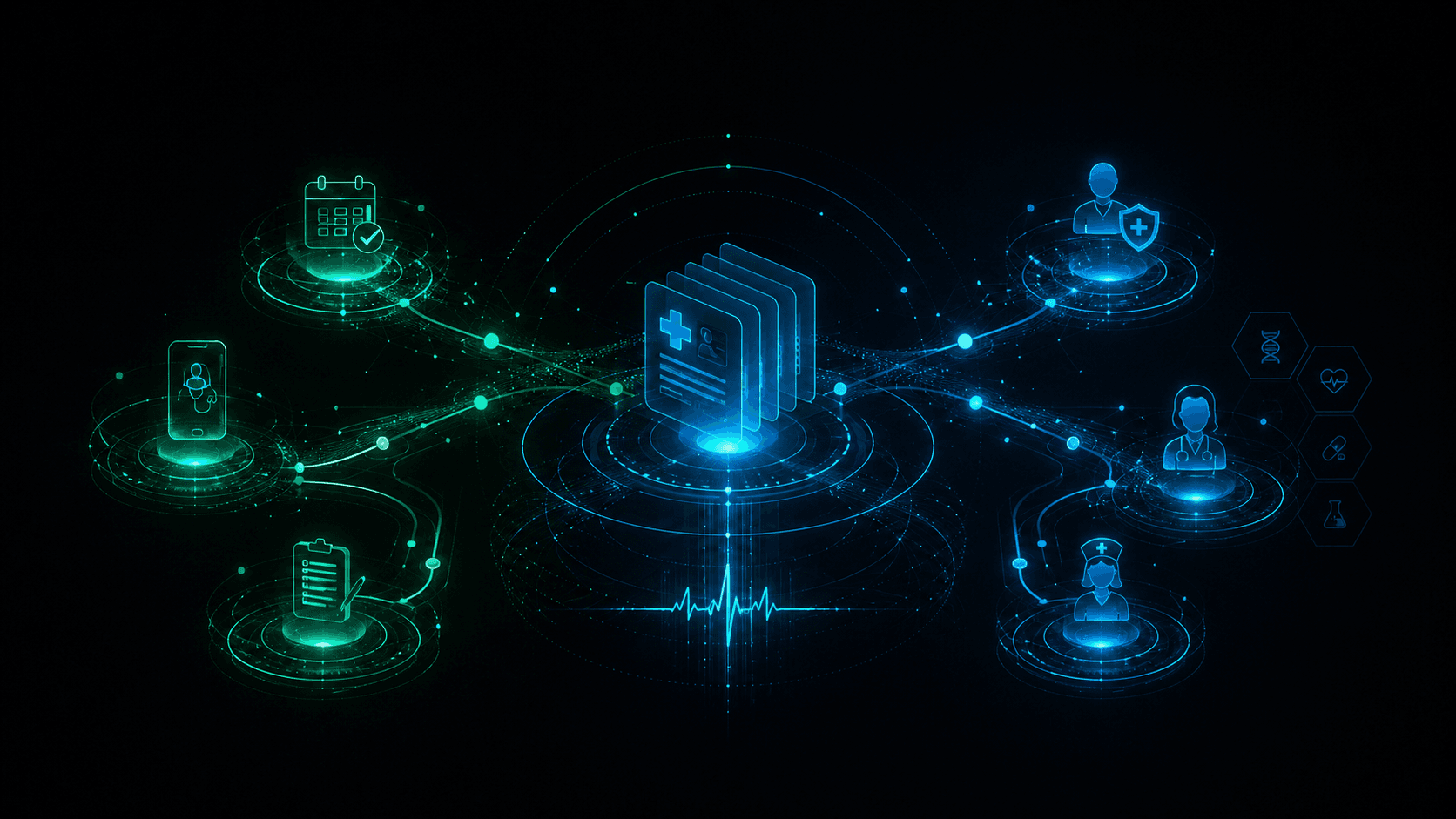
CarelineOS started as a digital health startup out of the LCE LUMS accelerator, and I co-founded it and engineered it end-to-end — from data model to deployed UI, with a MUI frontend, Node.js backend, and MongoDB underneath. Digital health tools in this market tend to be single-purpose: a booking widget here, a records system there, leaving hospitals to stitch together disconnected software. The brief was one platform serving four very different user types — admins, doctors, patients, staff — with different permissions and workflows, without it feeling like four products bolted together.
What I Built
- 100+ REST APIs spanning appointments, patient records, vitals, and analytics
- Role-based access control — admin, doctor, patient, and staff each see a purpose-built view with granular permission guards
- Vitals analysis dashboard — trend visualization for blood pressure, heart rate, and other recurring readings so doctors can spot patterns at a glance
- Secure doctor–patient messaging — confidential communication threads tied to a patient's care record
- Multi-tenant hospital & clinic management — one platform instance can serve multiple facilities without data bleeding across tenants
- Appointment scheduling engine — conflict-aware booking across doctors and departments
Tech Stack
- Frontend: React, MUI
- Backend: Node.js, Express
- Database: MongoDB
- Auth: JWT, role-based guards
Trade-offs
MongoDB won over a relational database for the core data model because patient records, vitals, and messaging threads vary in shape across hospital and clinic tenants — a flexible document schema let each facility onboard without a migration. Role-based access checks live at the API layer, not just the UI, so a doctor-only endpoint stays protected even if a client request bypasses the frontend. The app was also split into its own project from the backend early, even though both shipped together, so the API contract stayed the actual source of truth rather than an implicit agreement baked into one codebase. Vitals dashboard and messaging got priority over a broader feature list first, since those were the two workflows doctors actually opened the app for daily.
Outcome
Delivered a production-ready digital health platform for the LCE LUMS cohort with scalable architecture and clean separation of concerns between roles, data domains, and tenants — the foundation the CarelineOS backend (its own project) now serves.